Investment Magazine / Sana'a
They couldn’t see the pink color or recognize the visual symbols, but a number of blind individuals in Sana'a were able to “read” the new 200-rial banknote in a different way—not with sight, but with touch.
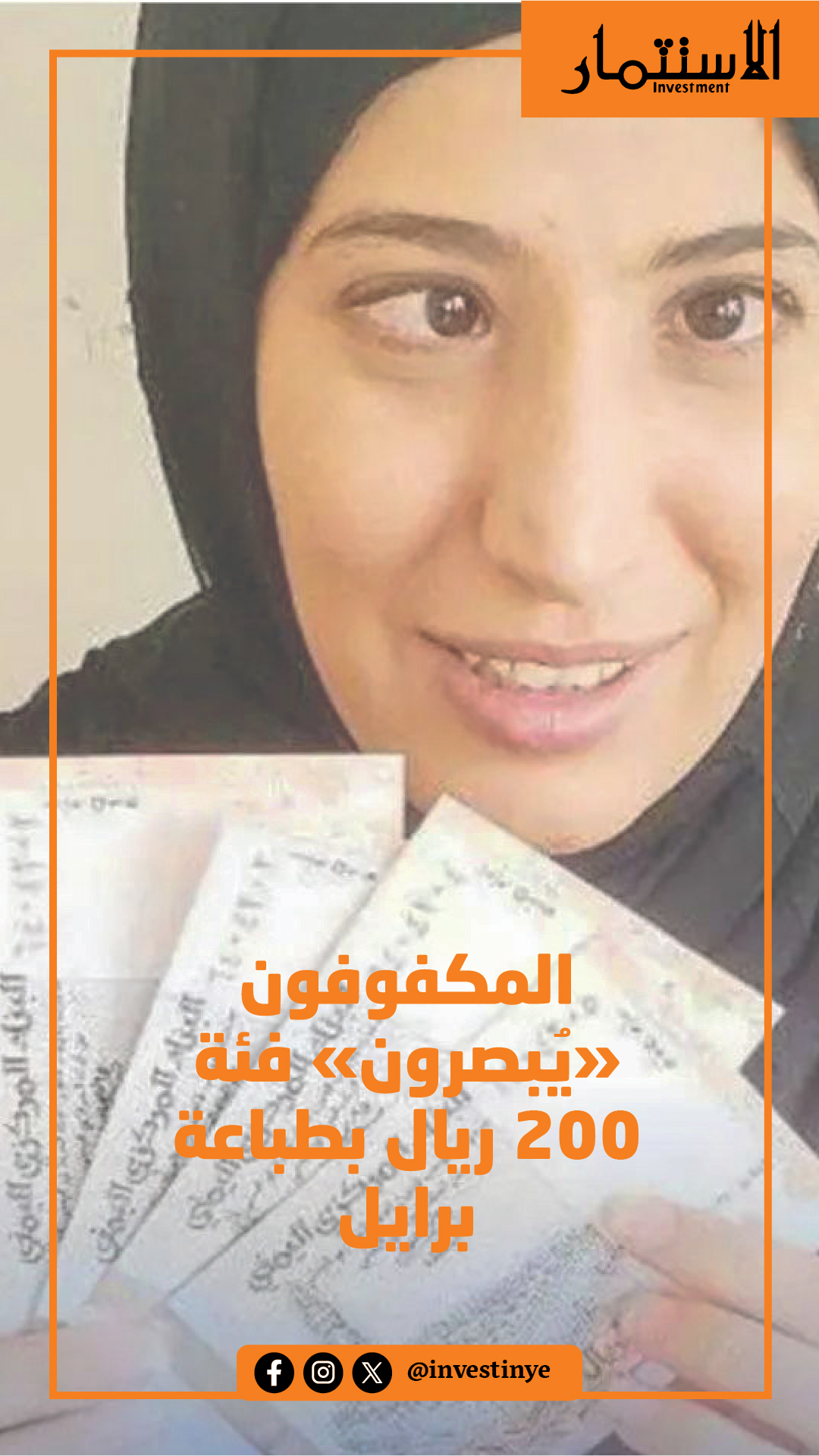
As they ran their fingers over this banknote, issued by the Central Bank of Yemen in Sana'a, they felt raised lines and finely engraved dots, specially printed in Braille. Their faces lit up with a joyful surprise, a unique feeling of inclusion they weren’t used to.
It is the first time Yemen’s monetary authorities have considered the blind in designing a banknote. This edition stands as a practical notice that visually impaired individuals are not left out of financial policies.
Through the Braille layer, blind people are now able to identify the denomination of the banknote without needing assistance. They described this step as “simple on the surface, but profound in meaning,” as it implicitly acknowledges their right to independence, human dignity, and their active role in the daily economic cycle.
Disability rights activist “Hayat” expressed this sentiment in a candid tone, saying: “Some people might see it as a small thing, but for us, it’s the first time we felt seen… We don’t have to ask someone to tell us which bill is which—we can now figure it out on our own.”
Social activist Ibrahim Mohammed Al-Munifi affirmed that this step should be credited to the authorities in Sana'a, saying: “We may disagree politically, but caring for marginalized groups, including the blind, is a sign of progressive awareness that deserves recognition.”
Some blind individuals go beyond the technical aspect, considering the adoption of Braille on currency not merely a response to their needs but a declaration that they are not on the margins of the economy—they are at its core. As one of them put it, “It’s a message that says we are visible, even if we do not see.”
Technically speaking, Braille—a system invented by Frenchman Louis Braille—encodes letters and numbers in raised dots that the blind can “read” by touch. By applying this method to the surface of the currency, it has become possible for a blind person to determine the banknote’s value independently, without fear of mistakes, fraud, or reliance on others.
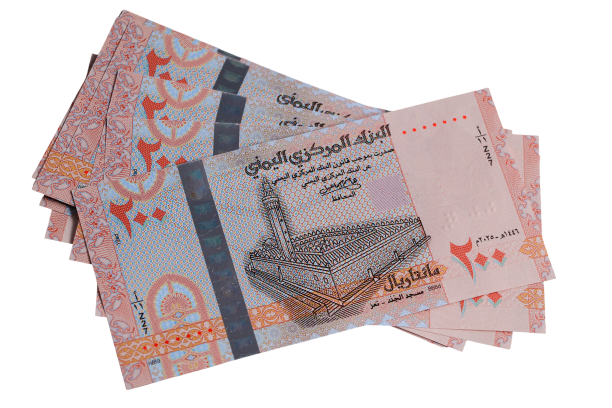
The Central Bank in Sana'a announced the second edition of the 200-rial note, explaining that it was printed following the latest international standards, incorporating advanced security features, some visible to the naked eye and others revealed only under ultraviolet light.
The note measures 155.2 mm in length and 76 mm in width. It includes a glossy layer, a metallic security strip, and an uncolored raised dot on the front side, which serves as the distinctive Braille mark. This is Yemen’s first attempt at integrating visually impaired individuals into the financial system at such a level of recognition and empowerment.
It is merely a piece of paper, but for the blind, it is much more than that—it is a “tangible acknowledgment” that their presence matters, their voices are heard, and their fingertips can “see” what their eyes cannot.