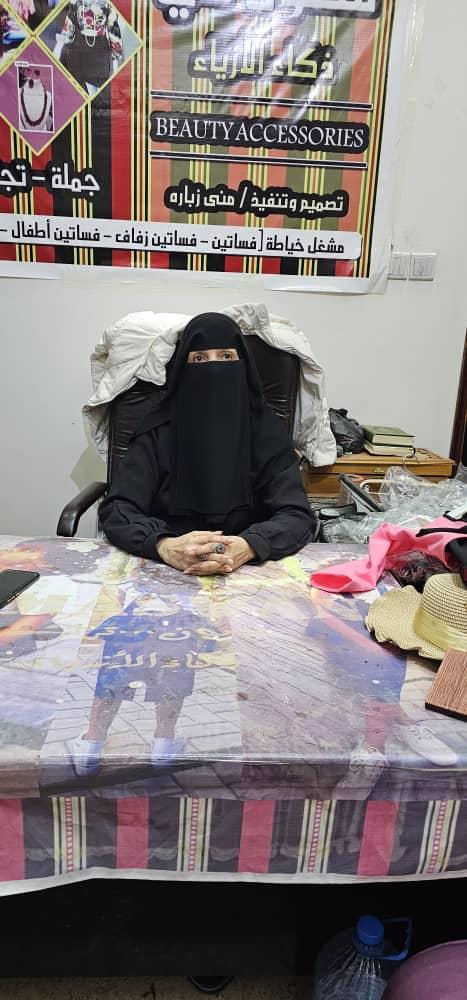
Mona Zubarah: Localizing the Tailoring and Embroidery Sector is a Positive Step That Needs Support in Marketing and Sales
Investment Magazine – Exclusive
With the launch of the new Investment Law in early February 2025, hopes are rising for a significant boost in attracting practical investments to Yemen’s textile and garment industry. The focus is on fostering partnerships along the value chain, as this sector has the potential to create jobs and add value to the local market, which currently relies heavily on imported fabrics.
Today, in parallel with economic stimulus efforts, the Ministry of Economy, Industry, and Investment, along with the General Investment Authority, is actively working to localize textile and garment production. Their efforts are beginning to bear fruit, with tailoring and embroidery workshops operating at full capacity to supply the market with locally made clothing ahead of Eid al-Fitr 1446 AH.
In this context, Investment Magazine spoke with several tailoring and embroidery workshop owners to discuss the significance of this sector, the role of productive families, the challenges facing the industry, and the incentives available to support its development.
Empowering Yemeni Women to Support Productive Families
Mona Yahya Zubarah, Executive Director of the National Team for Productive Families and owner of "Masoon T" Tailoring Workshop, views the localization of the tailoring and textile sector as a vital step toward strengthening local production and ensuring sustainable economic growth for productive families, particularly women working in this field.
Zubarah highlighted that tailoring workshops represent a lucrative investment opportunity, provided they receive adequate support in marketing and product promotion. She emphasized that the quality of women's clothing produced in her workshop has been widely recognized, based on evaluations by specialized committees assessing quality and design standards.
She urged relevant authorities and business owners to support local products by purchasing from women-run workshops, as this would empower productive families and ensure the continuity of their businesses in the tailoring sector.
Calls for Support
Lubna Abdulmajid Al-Wuhaishi and Somaya Ahmed Mohammed Al-Sari, owners of Novashion Tailoring Workshop, stressed that tailoring workshops serve as essential projects for productive families and noted a growing government commitment to supporting this sector.
They revealed that the Minister of Economy, Industry, and Investment, Eng. Moeen Al-Mahakari, alongside his deputy and the Chairman of the General Investment Authority, Yasser Abdulkarim Al-Mansour, have directed relevant entities to purchase the accumulated stock of products from productive family workshops. This move aims to ensure the sustainability of tailoring businesses and support productive families.
The two entrepreneurs also underscored the importance of protecting local products from unfair competition by limiting the influx of cheap imported goods. They further called for measures to prevent the monopolization of raw materials, such as fabrics, to help stabilize the prices of locally produced garments.
Al-Wuhaishi and Al-Sari concluded by emphasizing the pivotal role of productive family workshops in localizing the textile and garment industry. These workshops provide employment opportunities for women and contribute to the national economy, necessitating greater attention from government agencies and traders to guarantee the success and sustainability of such ventures.
The Past Five Years: A Sector in Decline
The decline of local cotton cultivation has significantly impacted the textile sector. As a result, fabric manufacturing in Yemen has become heavily dependent on embroidery and production workshops that rely entirely on imported raw materials. This reliance has increased costs and reduced the country’s self-sufficiency in textile production.
Future Direction and Policy Decisions
In an effort to support local production, several strategic decisions have been made to revive the textile sector and strengthen domestic industries. These measures include:
1. Encouraging the cultivation of local cotton to provide raw materials for the textile industry, reduce dependence on imports, and achieve self-sufficiency in this sector.
2. Restricting the import of high-demand artisanal products, such as maqateb (traditional Yemeni waist wraps) and towels, which are locally crafted in homes and small workshops. This policy aims to protect traditional handicrafts and preserve these heritage industries from extinction.
Government Initiatives and Incentives
As part of its efforts to localize and expand domestic textile production, the government introduced a package of incentives and tax exemptions for the textile and tailoring industries on June 11, 2024. These initiatives include:
- Full tax exemption for tailors and tailoring workshop owners, including exemptions from income tax and profit taxes.
- A 100% tax exemption on all inputs needed for domestic garment production, including machinery, equipment, supplies, and fabrics.
These incentives are expected to lower production costs, enhance local manufacturing, and improve the competitiveness of Yemeni-made garments against imported ready-made clothing. These measures align with the national vision for state-building, which prioritizes encouraging local production.
Practical Steps for Industry Growth
Key action plans include:
- Supporting farmers and encouraging them to return to cotton cultivation as a strategic crop.
- Stimulating investment in the textile industry and expanding local production capacity.
- Reducing foreign currency outflows by minimizing imports.
- Strengthening the national economy and promoting locally made artisanal products.
- Encouraging productive families to scale their businesses and innovate.
Recommendations for Sustainable Development
Economic experts recommend launching financing programs to support cotton farming and incentivize farmers to revive this vital industry. They also stress the need for investment incentives to establish textile manufacturing facilities that rely on locally sourced raw materials.
Additionally, they advocate for enhanced marketing and promotion of national products to boost sales, particularly for women-led tailoring workshops. Government agencies are urged to continue purchasing local products to ensure the long-term viability of these workshops.
Experts also call for measures to curb random imports that harm local industries, along with awareness campaigns to foster a culture of supporting national products. Moreover, simplifying access to raw materials at fair prices is essential to sustaining production in local tailoring workshops.
By implementing these recommendations, Yemen can revitalize its textile and garment industry, create employment opportunities, and build a resilient, self-sustaining economy.
Comments