Prepared by: Ahmed Al-Tayyar – Investment Magazine
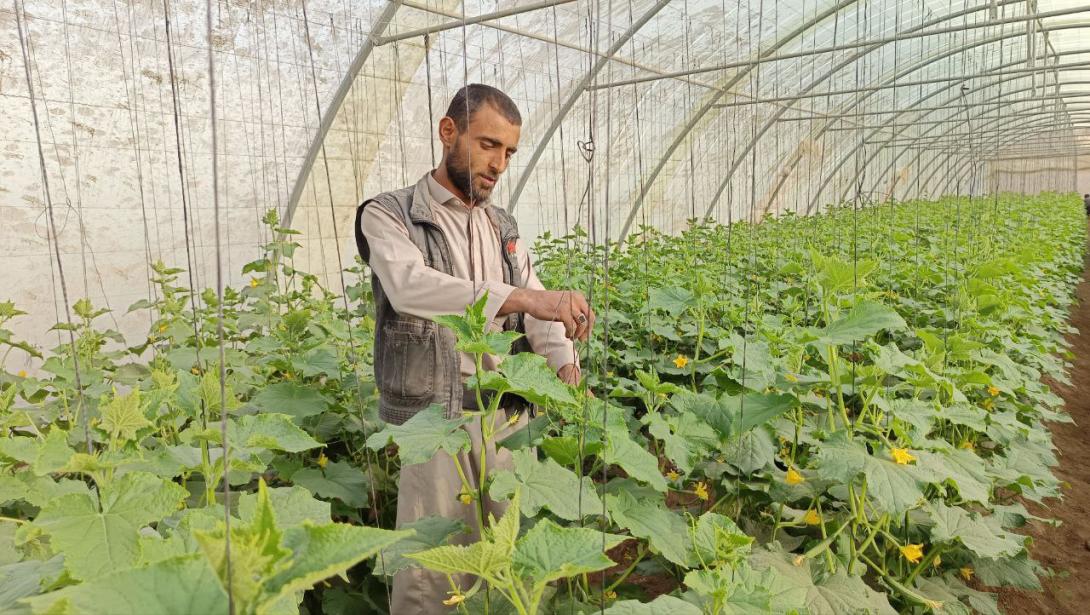
In the heart of Yemen, where agriculture is deeply embedded in the country’s history and identity, Engineer Yasser Ali Ahmed Sudan is making strides in the field of hydroponics. He believes this is not just a modern technology but the key to achieving self-sufficiency and boosting local production. Despite his background in telecommunications engineering, he chose to return to his agricultural roots, aiming to revolutionize the sector by adopting the latest agricultural technologies. Driven by an ambitious vision, he seeks to position Yemen as a leader in vegetable production and export in the coming years.
From Agricultural Roots to Innovation Leadership
Born in Amran Governorate in 1989, Yasser Sudan grew up in a farming family known for cultivating grapes and corn. Although he pursued a degree in Communications and Electronics Engineering at Sana’a University and graduated in 2013, his passion for agriculture remained strong. He returned to the field with a new perspective—one that integrates innovation and technology to enhance agricultural practices.
From Idea to Reality
The concept of hydroponics first took shape between 2011 and 2013 under the supervision of Engineer Wajih Al-Mutawakel. What began as a single greenhouse gradually expanded to five, supported by the Bank of Yemen and Kuwait, the Agricultural Committee, and the Seed Propagation Foundation. The journey was not without challenges, as Yasser and his team conducted extensive experiments on organic fertilizers across several governorates. Working closely with experts from research centers, the Pesticides Authority, and the Natural Pesticides and Plant Production Unit, they ensured that their methods aligned with sustainable and environmentally friendly agricultural practices.
Dhahban Farm: A Model for Success
Today, Yasser Sudan leads an ambitious agricultural project in the Dhahban region, where he has successfully turned hydroponic farming into a pioneering model. His work contributes to increasing agricultural productivity and optimizing water usage—a critical achievement in a country grappling with environmental and climatic challenges.
Comments